
Woodstock & Blue Point cocktails,
two forgotten classics ?
It was by a happy coincidence that I came across the blog of the multi-passionate engineer and math teacher Dennis Simanaitis , and, especially on this post, entitled : “I’ll have a Pink Lady, and a cocktail too” .
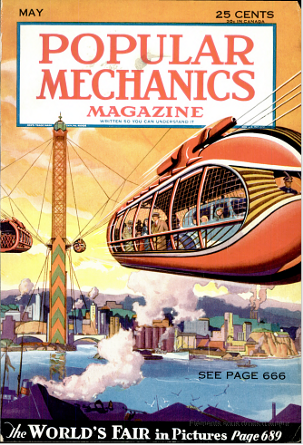
It is about a rather original object, about the size of a big coin, a kind of copper pocket rotary gadget with a bunch of essential cocktail recipes, in all likelihood dating from 1933–1934, during the Chicago’s Century of Progress World’s Fair where an imposing transporter bridge called “The Sky Ride” had been built for the occasion.
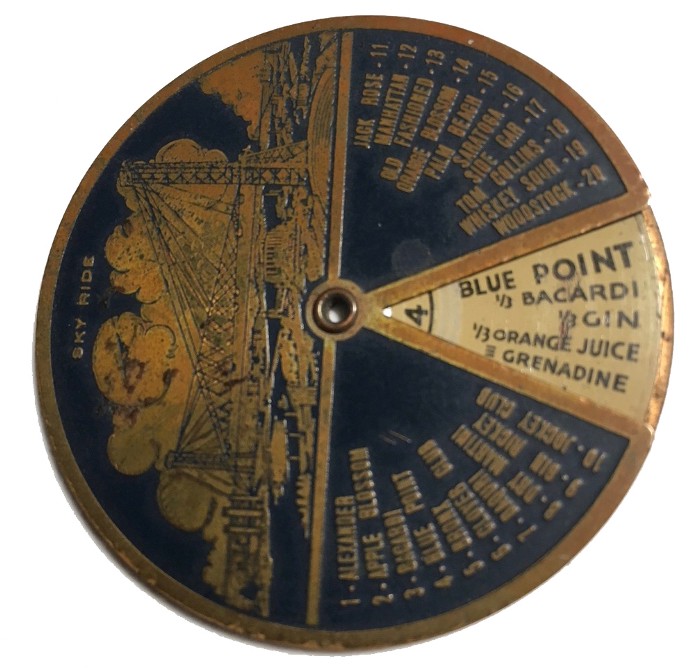
Cheeeeeeerrrrrs!!! It sounds like a Howard Hughes plane rushing through the roaring twenties, the Prohibition, Back to the Future of Speakeasy, and all right in the page 666 of Popular Mechanics. Don’t forget, drink in moderation, despite Covid19 containment, at least enough to find a compromise between Hiram Bingham III inspiring Indiana Jones in search of the lost artifact and… the great Gatsby…


If you want to immerse yourself in the atmosphere, vintage images and videos, I invite you to take the time to carefully view these links below including the precious Terry Gregory’s Chicago-themed website :
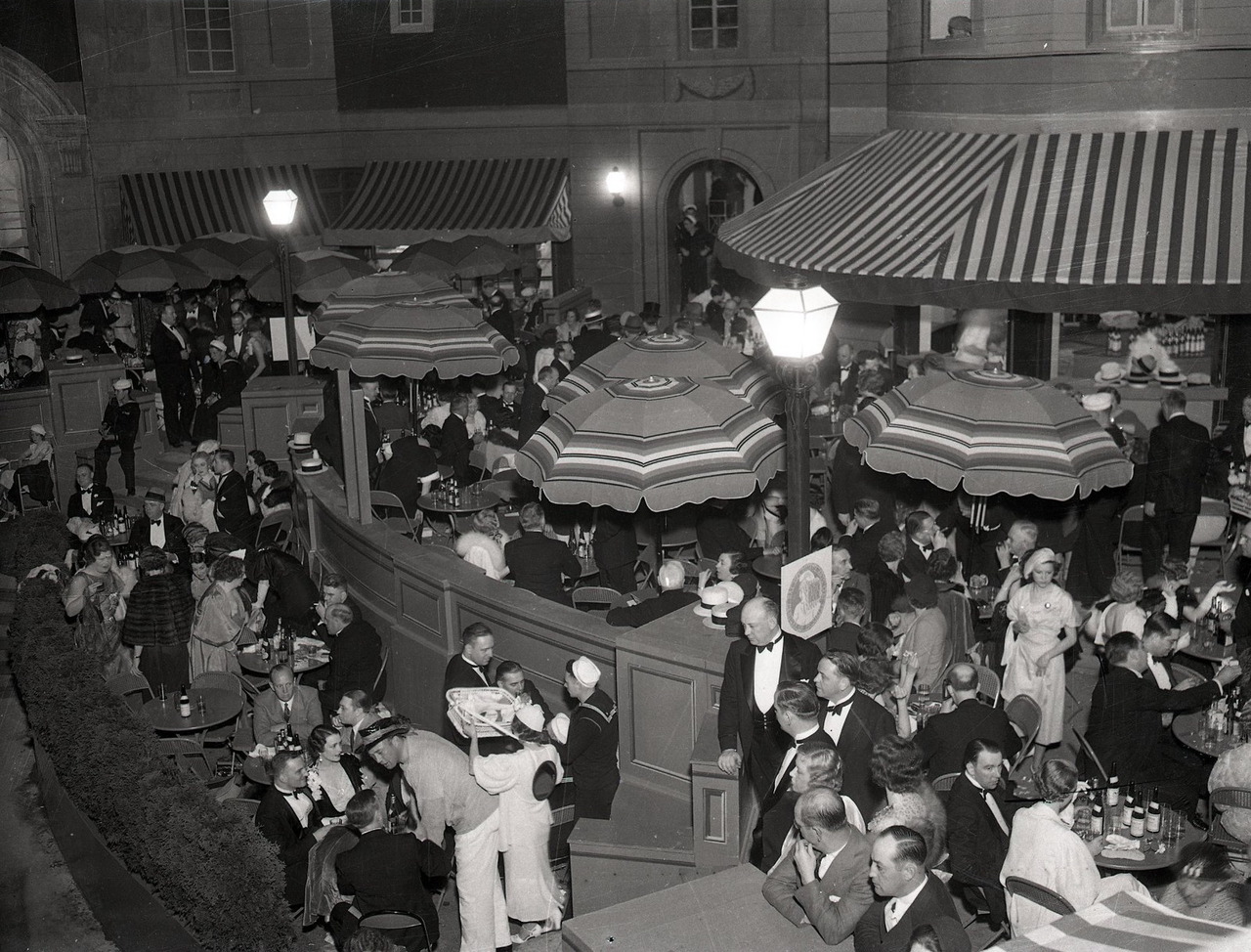
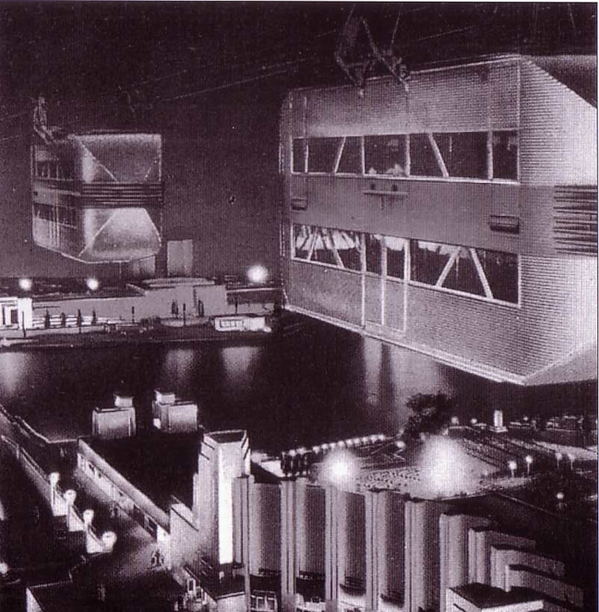
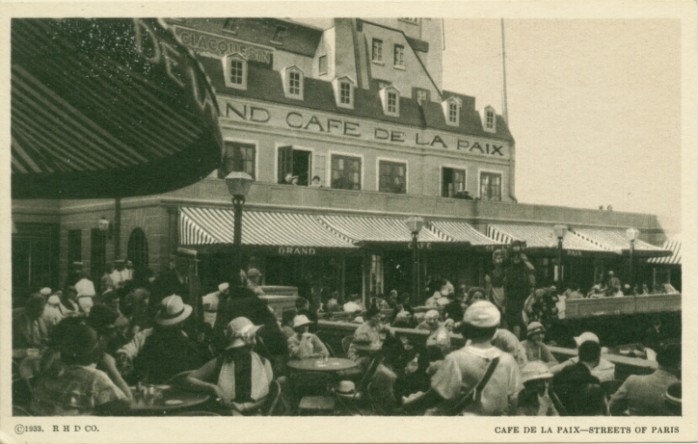
You will find that there were, unless I am mistaken, no less than six famous places for a drink :
• “Canadian Club Café” in the Hiram Walker exhibit
• Streets of Paris, "Café De La Paix"
• Pabst Blue Ribbon Casino
• Victor Vienna Garden Café
• Old Heidelberg Inn
• Schlitz Garden Café
To get a better idea of what’s going on behind the scenes you can consult, among other, two books :
— “Chicago’s 1933–34 World’s Fair : A Century of Progress” by Bill Cotter
— “Al Capone and the 1933 World’s Fair : The End of the Gangster Era in Chicago” by William Elliott Hazelgrove
Now that we are well immersed in the context, let’s return to our rotating treasure…
It is a direct and palpable testimony of what could be the essential list of cocktails that marked an era. Outside books it is rather difficult to find this kind of reference. For me, as a waiter, bartender in the making, and interested in the subject, this deserves that i dwell on it.
20 recipes, 10 on each side, in an alphabetical order :
1 • Alexander
2 • Apple Blossom
3 • Bacardi
4 • Blue Point
5 • Bronx
6 • Clover Club
7 • Daquri
8 • Dry Martini
9 • Gin Rickey
10 • Jockey Club
11 • Jack Rose
12 • Manhattan
13 • Old Fashioned
14 • Orange Blossom
15 • Palm Beach
16 • Saratoga
17 • Sidecar
18 • Tom Collins
19 • Whiskey Sour
20 • Woodstock
Within this list, apart from the hazardous spelling of “Daïquiri”, and the Dry Martini recipe which is rather that of a “normal” Martini, two names of cocktails unknown to me stood out :
— 4 • The “Blue Point” : 1/3 Bacardi 1/3 Gin 1/3 Orange juice and a dash of Grenadine
— 20 • The “Woodstock” : 2/3 Apple Jack, 1/3 Dry Vermouth, Bitters, and Syrup.
Perfect, never mind, let’s search on the internet and in my personal tiny library…
For information the EUVS Vintage Cocktail Books Library and the Difford’s Guide are serious good starting points.
— The Woodstock Cocktail —
Let start with the “Woodstock” which, given the proportions and the presence of vermouth, seems to be obviously a variation of a Martini or a dry Manhattan, with respectively the Apple Jack instead of Gin / Rye Whisky, and dry Vermouth instead of sweet.
At the level of the historical written traces, concerning vermouth, in the different recipes, the evolution go from sweet to dry over the ages, for various reasons, especially practical, that it would take too long to list here — like access to information, to the products available depending on the place, and tastes of the time… When a cocktail has the qualifier “perfect” it commonly means that it will have an equal share of dry and sweet vermouth in its composition.
While the term “Dry” before the name of the cocktail tends to mean that there will be a small proportion of vermouth (yes … vermouth dry in this case … too). Add to that the fact that Martini is also a brand of vermouth … can complicate things.
About ratios, it seems like David A. Embury in 1948 “Fine Art of Mixing Drinks” page 116 to 123, was one of the first to try an approach that could be described as unifying by assigning to the main families of recipes a pattern based on combinations / ratios rather than ingredients. Which allows you to have a little more perspective and more easily assimilate the fundamentals among the plethora of recipes. In our case we are in the presence of a “212”, the Manhattan pattern, and its cousin Martini : 2 parts of spirit, 1 part of vermouth, 2 parts of bitter.
Take a look at the brilliant “Seven Pillars of Classic Cocktails” by Bittercube.
Well… where am i going to find trace of an Apple Jack Martini called “Woodstock” ?… knowing that the Apple Jack is highly targeted in the US market, but that the terms Calvados or Apple Brandy might as well do the trick to describe the recipe.
Never mind, I’m going to take a look at the Laird&Company America’s Oldest Distiller and I was able to discover the existence of :
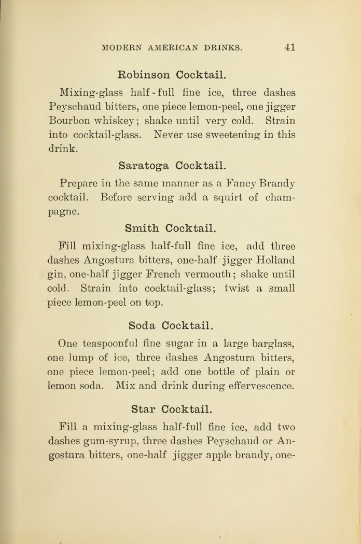
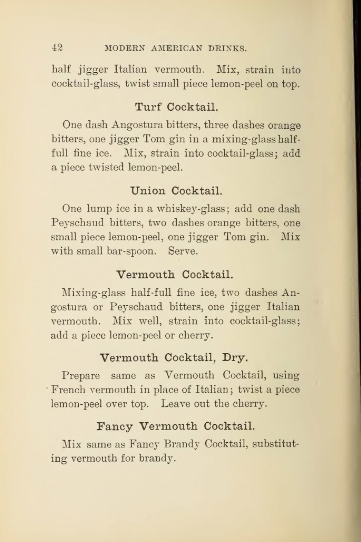
● “The Star” cocktail, a variation of the Manhattan, page 41–42 from George J. Kappeler’s 1895 “Modern American Drinks” … but nothing with dry vermouth.
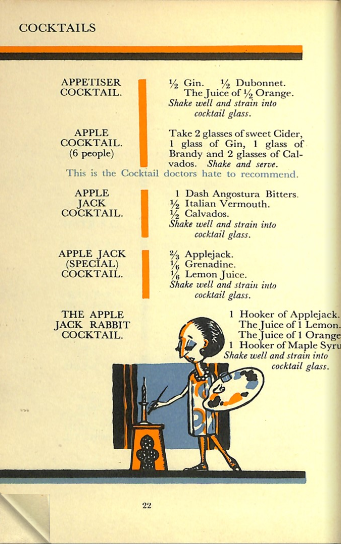
● Originally published in 1930, The Savoy Cocktail Book, by Harry Craddock, actually contains a recipe called “Apple Jack”, with 1/2 Laird Apple Jack or Calvados, 1/2 sweet/Italian vermouth and 1 dash Angostura Bitter… same disappointment
Notwithstanding a fairly sustained investigation, to date, I have not found something more relevant. I have not yet given my last word, but until proof to the contrary, the “Woodstock” seems singular : not an already existing recipe renamed for the occasion, but an unreferenced variation of a Martini (called “Woodstock” due to support size constraints … and fun… maybe the mark of the creator’s typewriter or any other reason that escapes me.)
Speculation remains open…
— The Blue Point Cocktail —
Now let’s take care of the no less intriguing, “Blue Point”. Here too, no cocktail referenced under this name to my knowledge. But, as two main ingredients are Bacardi rum and gin, some potential candidates seem to be on the horizon :
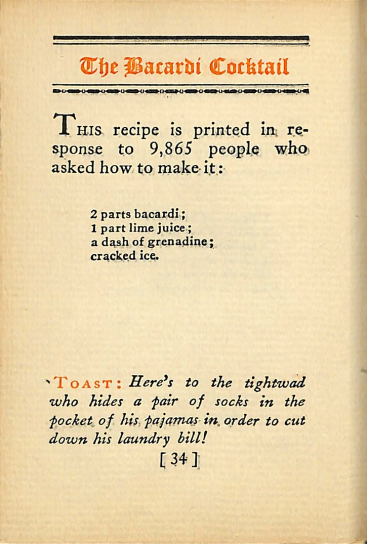
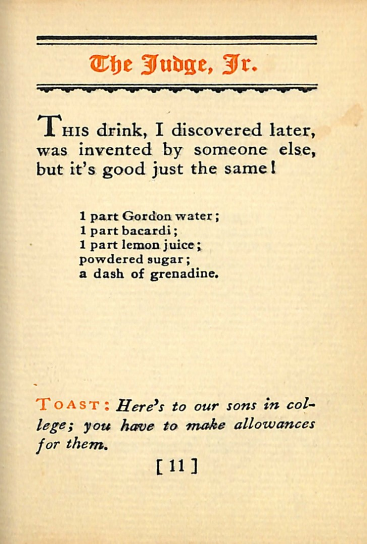
● From 1927 “Here’s How!”, Judge Jr. page 11 (wink at the title of the book)
The “Judge Jr. Cocktail” : 1/3 Gin 1/3 Bacardi Rum 1/3 Lemon Juice, Powdered Sugar and 1 Dash of Grenadine
● The “Flying Tiger” cocktail from Bacardi official website :
3,5 cl rum Bacardí Carta Blanca
1 cl gin Bombay Sapphire
0,5 cl sugar syrup
0,5 cl grenadine
2 dashes Angostura bitter
● The 1930 Savoy Cocktail Book, page 25, makes mention of the “Bacardi Special” cocktail :
1/3 Gin
2/3 Bacardi Rum
juice of 1/2 Lime
with a “blue asterisk” like this “ *Made famous by Karl Kingsley Kitchen (1885–1935), the well known New York Newspaper Columnist. ”
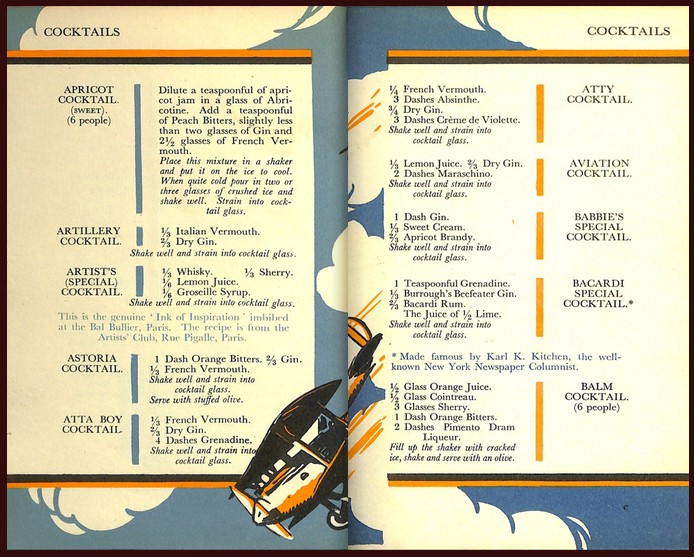
But you will agree, among the earliest Judge Jr. reference in 1927, making itself reference to another oldest unknown one, and, that 1930 reference with a “blue dot/point” … we do not see anywhere mention of orange juice in the recipe.
Perhaps it would not be an unfortunate coincidence that the original recipe, if it exists, noted somewhere, was rather with orange … thus giving the cocktail a less tart finish … especially considering the proportions 1/3 1/3 1/3 which are not sufficiently compensated by grenadine to my taste.
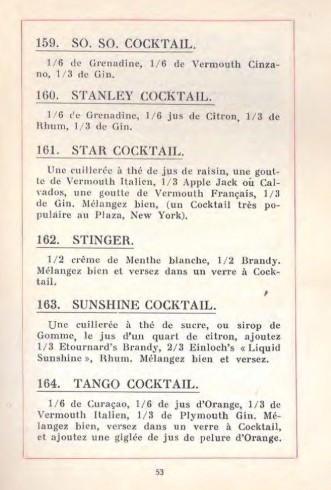
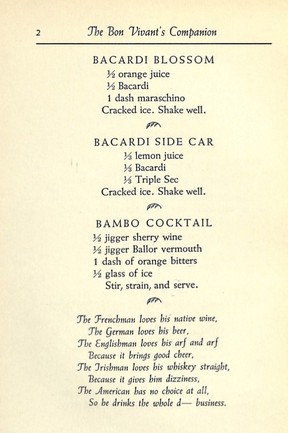
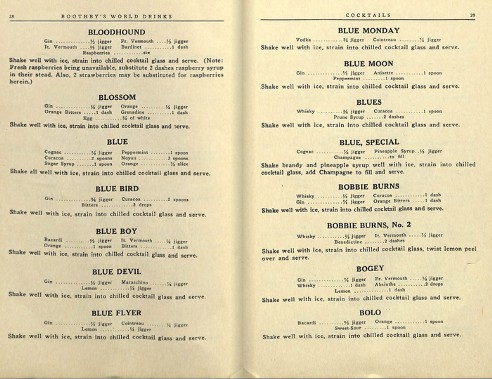
With its orange notes, the addition of the adjective “blossom” would suit it. A cocktail called “Bacardi Blossom” exists in the George A. Zabriskie 1933 “Bon Vivant Companion” page 2 … and … Karl Kingsley Kitchen (1885–1935) was a bon vivant. In the same way the “Blossom” page 28 of 1934 Bill Boothby’s book brings the touch of grenadine and gin… And the same applies to the “Stanley” page 53 from 1927 Piero Grandi’s book…
It appears that, from the foam of an era, the name “Blue Point” would be filled with finesse and references by its anonymous promoter, giving this small tool an original subtle soul.
Are we here in the presence of recipes passed between the cracks ? But beyond that, how much credit should be given to this object? …Anyway what a trip!

— Feel free to discuss the subject and skim the old books…