
Death & Cocktails
For centuries, Italy and France have been the homelands of great wines, great cuisine and great liqueurs.
In the 18th century, liqueurs were prized throughout Europe, especially those with a bitter almond flavour from fruit pit. The sloe, also used for a whole variety of gins, and the apricot have in common the characteristic of having very aromatic almonds inside their kernels. Almonds (fruit of the almond tree) and peach pits are not to be outdone either.


The recipes have been jealously guarded and kept secret ever since, distilling their stories and legends to keep the flame burning.
At the present time, two brands still resonate as two flagships of their respective countries :
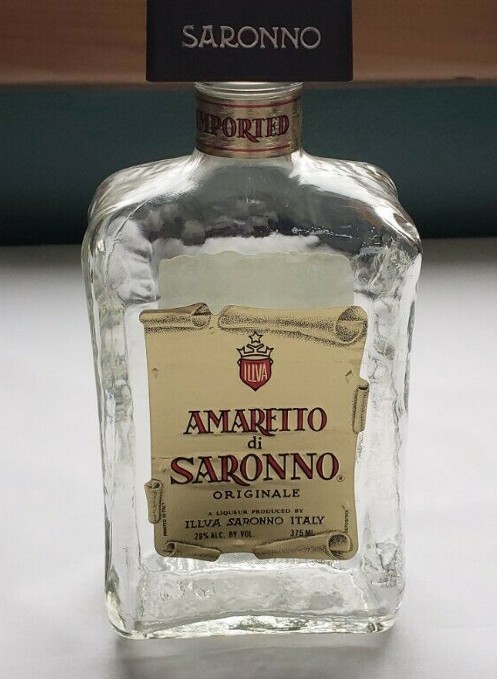
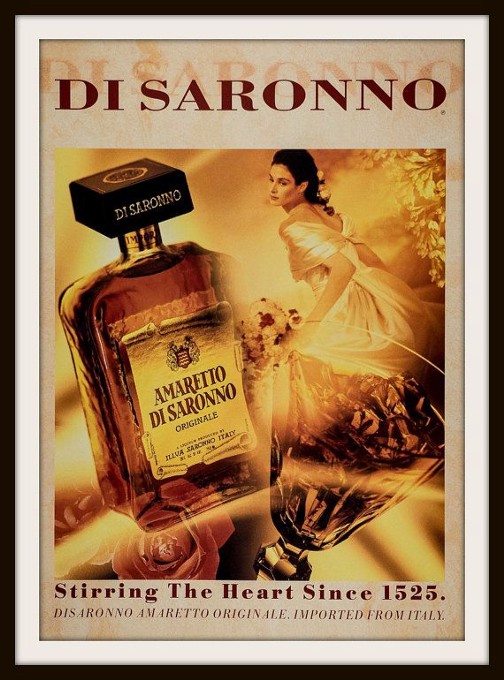
— Italy : "Amaretto Di Saronno Originale" —
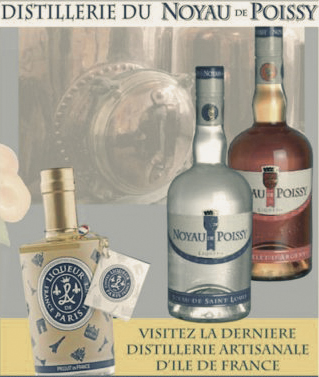
— France : “Le Vrai Noyau de Poissy” —

And when it comes to cocktails, we no longer present the famous “Amaretto Sour”, or the “French Connection” (with Cognac) and the “Godfather” (with Scotch), to recite nobody else but them… probably due to the fact that the amaretto has a greedier side… while the liqueur/crème de Noyau has, with a few exceptions, only the “Pink Squirrel” or the “Lily” to its credit… the names are more sparkling, certainly … I know, I’m exaggerating a little bit…
All the more so since, it must be said, renowned brands such as Tempus Fugit Spirits have not hesitated to put the “Crème de Noyaux” back on the world stage.
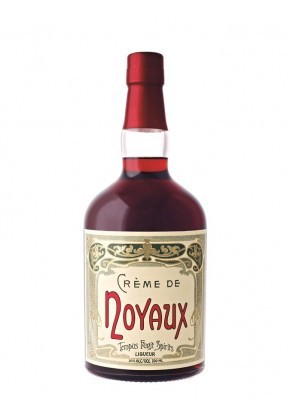
The Difford encyclopedia is a wealth of information, I invite you to consult the files of each cocktail as well as to follow the link to the Michael Lazar’s (the Hard Water bar) blog post about Noyaux.
A way to bring (if it had been necessary) this product, which is still made in the oldest remaining active distillery in Paris, back into fashion.
Let me just digress for a second…I have to be honest… I have the feeling that the Italians have always been a little bit ahead in the art of telling their love story with the product and in pure gourmandise in general. There’s a lot to experiment with the various liqueurs to their credit.

One should not confuse amaretto with amaro, a different family of Italian herbal liqueurs that have a stronger bitter flavour derived from herbs. We can count among them, the amari so : Averna, Montenegro, Cynar, Fernet Branca… The range of Italian liquors can also be extended to what is called “Italian Red Aperitivo/Bitters”, which we no longer present for some, it’s about : Campari, Aperol, Contratto, Select 1920 … And, what i call “Italian Yellow Bitters” like Strega or Galliano. You will understand that there is enough to eat half the shelves with bottles of Italian liqueurs, each as essential as the other.
Did you know? … Traditionally speaking, the crimson red colour, carmine red kind, is a result of dried, then boiled, insects… the carminic acid extracted from Dactylopius Coccus females, aka Cochineal. If that can reassure you, today it’s chemical… … …

We really need it to be red like a Blue Hawaii ?!…

At the risk of becoming spoiled, while you prepare your drink, you could tell stories :

Around 1525, the painter Bernardino Luini, pupil of Leonardo da Vinci, was responsible for embellishing the sanctuary of Saronno dedicated to the Madonna dei Miracoli. To paint the Madonna, he chooses as a model a beautiful local innkeeper. As a sign of recognition, the latter offers him a liqueur with herbs and spices from the region, amber, fragrant and delicate. In summary, the amaretto was invented by a barmaid from the 16th century, who was also a model in her spare time. Her name, please?


Another example that Art, Italy and cocktails always go well together ?

The Bellini cocktail was created at Harry’s Bar in Venice by Giuseppe Cipriani and has become the emblematic drink of the place. Mix of white peach nectar and Prosecco (an Italian sparkling wine), the cocktail was designed in 1948, and owes its name to the Venetian painter Giovanni Bellini (and not to the 19th century Sicilian composer Vincenzo Bellini, as we believe sometimes). Because it was widely available, the yellow ocher pigment was one of the first colors used in art…and a source of inspiration for the art lover Guiseppe… also inventor of carpaccio to meet the request of Countess Amalia Nani Mocenigo.
but…
wait…

I’m getting carried away, so let’s get back to the main point :
Who killed the old Mr. Whipley?
that’s what this is all about.
Amygdalin, a substance that, once in the stomach, breaks down and turns into hydrogen cyanide.
Indeed, a concentration of 0.4g of amygdalin per kg of body mass is the lethal dose.
Or about 40 to 50 bitter almonds or kernels eaten consecutively for an adult weighing approximately 70kg. (Guide pratique de toxicologie Reichl&Perraud page 134)
In Agatha Christie’s novels, Hercule Poirot does not fail to notice the cyanide poisoning signed by the slight smell of bitter almonds that it gives off.

Dorothy Leigh Sayers, in her short 1939 novel titled “Bitter Almonds” (from the collection “In the Teeth of the Evidence” page 349) has judiciously used for the unwinding of the plot, the hypothesis that : A bottle of Crème de Noyaux left long enough, more than four decades, rest in decanting, could have a significant probability that enough portion of amygdalin float up to the surface, with lethal consequences for the drinker of the first glass.
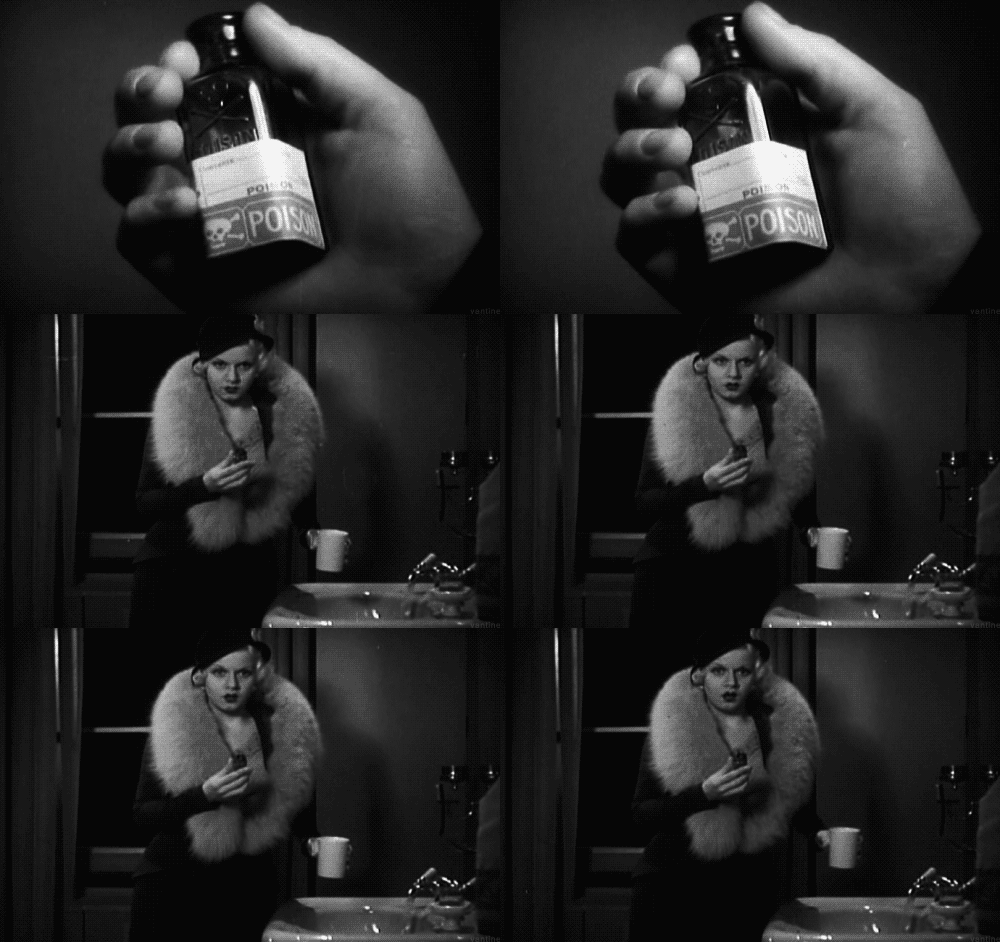


Agatha and Dorothy were both part of the Detection Club, in majority an association of British crime fiction writers, spurred on by Anthony Berkeley Cox in 1930, and still active today. I imagine that passionate discussions must have been going well around good cocktails.
Where does this strange tradition of banging our glasses, eye to eye, come from, saying a slogan that varies from country to country? Since the Middle Ages a priori; a time when eliminating rivals by poisoning was very common. To limit the risks, people used to toast, making sure that some of the contents of each glass would end up in the other when they collided…
uh…
i forgot…

In the same vein, ethyl carbamate is a potentially carcinogenic chemical that is formed during the fermentation process or the storage of fermented foods. It is therefore monitored and subject to strict controls / standards for fermented drinks. If you want to deepen the subject for some variety of spirits take the time to read some serious official studies online.
Measures are implemented during the manufacturing process to control trace of hydrogen cyanide.
Do not panic, it has existed since the dawn of time in nature. It is rather well known and referenced…
Many standards and tests are there to protect us, in addition of the information research process that you can do.
Alcohol abuse is dangerous for your health, consume with moderation.
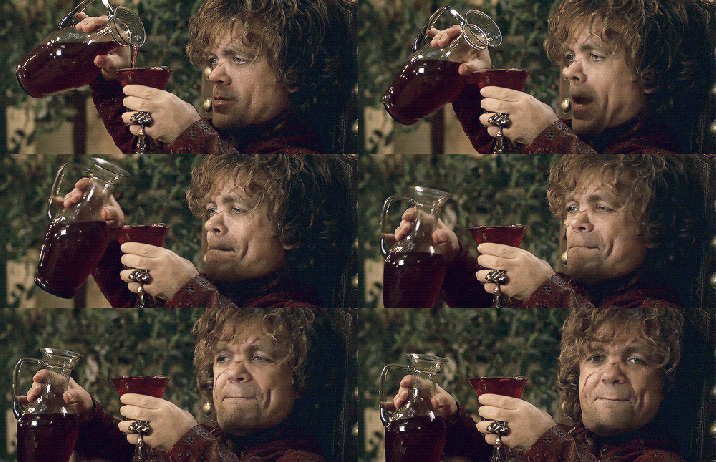

As always, in matters of poison, as for animated gifs, it is a question of dose and associations.